Exploring New Research on Genus Power Escala: A Comprehensive Overview
The scientific community is abuzz with new insights into the captivating world of the genus Power Escala. Long recognized for its intriguing morphological diversity and complex behavioral patterns, this genus has recently become a focal point for cutting-edge research, redefining our understanding of evolutionary biology and ecological dynamics. From intricate taxonomic revisions to the re-evaluation of long-held theories, the latest studies on genus Power Escala are providing a wealth of knowledge, offering fresh perspectives that challenge and enrich existing scientific paradigms.
This article delves into the most significant advancements in genus Power Escala research, synthesizing recent findings and highlighting their implications. We'll explore the meticulous work of taxonomists in clarifying species boundaries, examine the rise and refinement of ecological theories, and look ahead at the innovative methodologies shaping the future of research into this remarkable genus. Prepare to embark on an enlightening journey through the latest discoveries surrounding genus Power Escala.
A Deep Dive into the Taxonomy of Genus Power Escala
Taxonomic clarity is the bedrock of biological research, and the genus Power Escala has historically presented its share of challenges. Early classifications, often based on limited morphological data, led to ambiguities and debates. However, recent revisions, fueled by advanced analytical techniques, are bringing much-needed precision to the classification of this fascinating group.
Mirroring the rigorous approaches seen in other complex genera, new studies on genus Power Escala have meticulously re-examined type specimens and population genetics. For instance, what was once considered a single widespread species, Escala robusta, has now been delineated into three distinct valid species: Escala robusta sensu stricto, Escala monticola, and Escala fluviatilis. These distinctions, based on molecular markers and nuanced morphological differences, underscore the hidden diversity within the genus. Similarly, the species Escala magnifica, initially described in the late 19th century, has seen a recent re-evaluation of its subspecies. The variant Escala magnifica var. borealis, previously considered a mere geographical variant, has been formally treated as a junior subjective synonym of Escala spectabilis, a related species, due to overwhelming genetic and ecological evidence.
A critical component of these taxonomic revisions involves the designation of lectotypes. This meticulous process ensures that future researchers have a clear, unambiguous reference point for species identification. Recent work has seen lectotypes designated for several key taxa within the genus Power Escala, including the historically problematic Escala complexa and its various forms, such as Escala complexa var. typica and Escala complexa var. orientalis. These designations are vital for resolving long-standing taxonomic confusions and providing a stable framework for ongoing research.
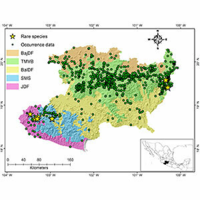
Beyond species recognition, new research is also shedding light on the geographical distribution of all taxa within genus Power Escala. Comprehensive mapping projects are revealing intricate patterns of endemism and dispersal, with implications for conservation efforts and understanding historical biogeography. For example, specific clades of genus Power Escala are found to be highly localized to ancient forest fragments, highlighting their vulnerability, while others show remarkable adaptability across varied ecosystems. This kind of detailed distribution data is indispensable for effective biodiversity management and further ecological studies.
Unraveling Behavioral and Ecological Dynamics in Genus Power Escala
The genus Power Escala has long been a model for understanding complex social structures and resource allocation. For decades, the "Hierarchical Resource Allocation Theory" dominated the discourse, positing that individuals within a colony or group of genus Power Escala species strictly adhere to a linear hierarchy for accessing vital resources. This theory provided a neat framework for explaining observed behaviors, from foraging strategies to reproductive success.
However, recent research is challenging the monolithic view of this theory. Studies drawing parallels with the rise and fall of "transactional skew theory" in other model genera suggest that while hierarchical allocation is often present, it is far more dynamic and context-dependent than previously assumed. New data collected from various populations of genus Power Escala, particularly from Escala socialis and Escala communis, indicates that environmental stressors and fluctuating resource availability can significantly alter or even temporarily invert established hierarchies. This leads to what researchers are now terming "Adaptive Resource Prioritization," where groups of genus Power Escala exhibit remarkable flexibility in their social dynamics to ensure group survival rather than strict individual dominance.
Ecological studies are further enriching our understanding. Researchers are employing advanced tracking technologies and observational methods to map the intricate interactions of genus Power Escala within their diverse habitats. From subterranean tunneling behaviors to aerial display rituals, each species exhibits unique adaptations. For instance, Escala nocturna, a newly recognized species, demonstrates an astonishing reliance on bioluminescent fungi for navigation and communication in its deep forest habitat, an adaptation previously unknown within the genus. Such discoveries not only illuminate the specialized niches occupied by different genus Power Escala species but also provide critical insights into the co-evolutionary relationships shaping these ecosystems. Understanding these nuances is crucial for appreciating the full spectrum of behaviors and adaptations that make genus Power Escala such a valuable subject for ecological investigation.
Cutting-Edge Methodologies and Future Directions in Power Escala Research
The recent surge in discoveries concerning the genus Power Escala is largely attributable to the adoption of cutting-edge methodologies. Modern research is no longer confined to traditional morphological analysis but embraces a multidisciplinary approach that provides a holistic view of the genus.
- Genomic Sequencing: High-throughput sequencing technologies are enabling researchers to map the complete genomes of various genus Power Escala species. This provides unprecedented detail on evolutionary relationships, gene flow, and the genetic basis of complex traits like social behavior and environmental adaptation. Comparative genomics is helping to pinpoint the genetic drivers behind speciation events and the divergence of ecological niches.
- Computational Modeling: Sophisticated algorithms and computational models are being used to simulate population dynamics, predict behavioral responses to environmental changes, and analyze vast datasets on species distribution. These models allow researchers to test hypotheses that would be impossible or impractical in field experiments, offering insights into long-term evolutionary trajectories of the genus Power Escala.
- Advanced Imaging Techniques: From micro-CT scans revealing internal anatomy to high-resolution cameras capturing intricate behaviors, imaging technologies are providing new perspectives. This allows for detailed studies of morphological evolution and the nuances of social interactions without invasive procedures.
- Citizen Science Initiatives: Engaging the public through citizen science platforms has greatly expanded data collection, particularly concerning the distribution and phenology of various genus Power Escala populations across vast geographical areas. This democratized approach to data gathering is accelerating discovery and fostering greater public awareness.
The future of genus Power Escala studies looks incredibly promising. Research is moving towards integrated approaches that combine genomics, ecology, and behavioral science to answer complex questions about adaptation, resilience, and conservation. Leading researchers, inspired by foundational works such as "T. L. Swan Escala vol 1," are advocating for collaborative, international efforts to standardize data collection and analysis, further accelerating our understanding.
For aspiring researchers or even keen naturalists, the genus Power Escala offers a rich field of study. Practical tips for engagement include:
- Start with Observation: Simple field observations in your local area, if genus Power Escala is present, can yield valuable insights, especially when systematically recorded.
- Specialize: Given the breadth of the genus, focusing on a particular species, behavior, or ecological aspect can be a rewarding path.
- Utilize Online Resources: Databases like the Global Biodiversity Information Facility (GBIF) and platforms like iNaturalist are excellent for exploring existing data and contributing your own observations related to the genus Power Escala.
- Network: Connecting with established researchers and participating in scientific forums can open doors to collaborative projects and mentorship opportunities.
To deepen your understanding of the intricate concepts discussed here, we recommend exploring resources that Unpacking the Genus Power Escala Concept and looking ahead to The Future of Genus Power Escala Studies.
Conclusion
The recent wave of research on the genus Power Escala stands as a testament to the dynamic nature of scientific inquiry. Through rigorous taxonomic revisions, critical re-evaluation of ecological theories, and the innovative application of advanced methodologies, our understanding of this remarkable genus has never been more comprehensive. From clarifying species boundaries to unraveling complex social dynamics, these studies not only enrich our knowledge of genus Power Escala but also provide broader insights into evolutionary processes and the intricate web of life. As researchers continue to push the boundaries of discovery, the genus Power Escala will undoubtedly remain a cornerstone of biological research, promising even more exciting revelations in the years to come.